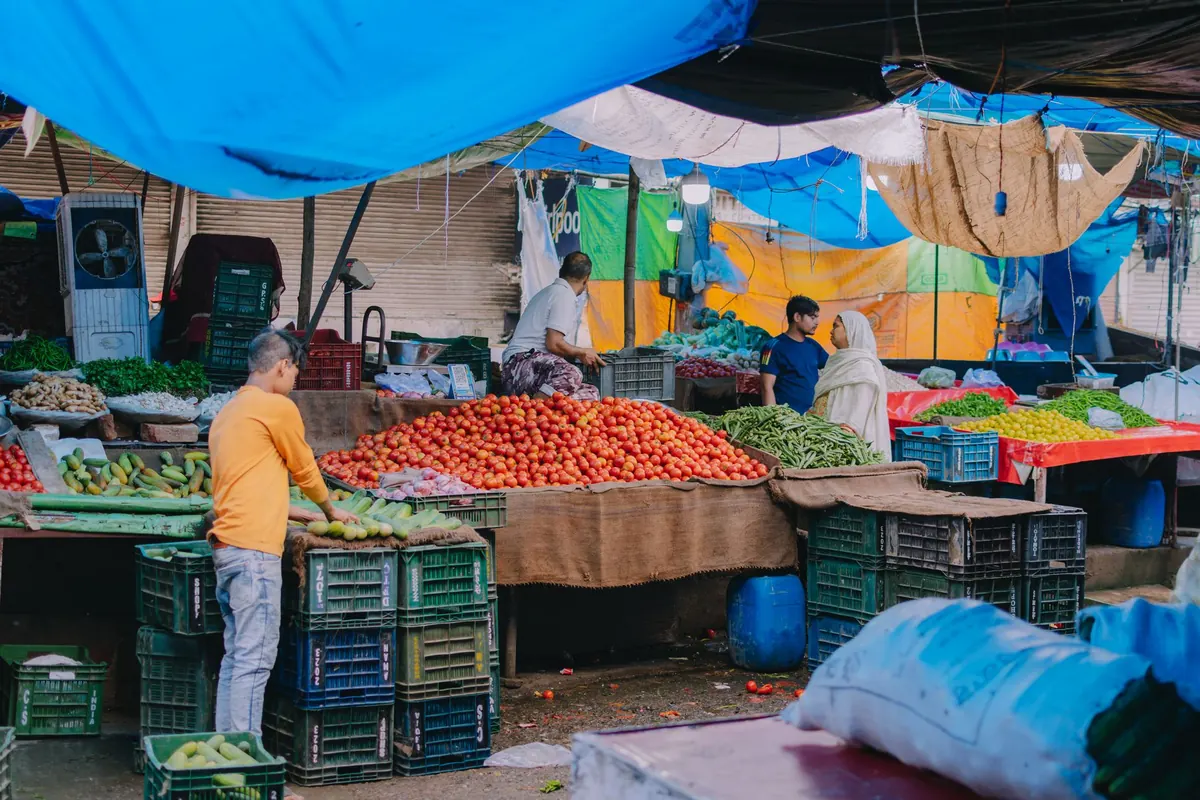
Bury Market is one of those places that rewards a bit of preparation. Come at the wrong hour with no plan and you'll spend twice what you intended, carry three bags you didn't need, and miss the stalls that were actually worth your money. Come with a rough strategy and you'll eat well, fill the fridge, and still have change. Here's how to get the most out of a first visit without treating it as a spending spree.
The market's busiest days are usually Wednesday, Friday and Saturday, when the widest range of stalls is trading. Check the market's own listings before you travel, because traders' days can shift and bank holidays change everything.
Within a trading day, the timing matters as much as the date.
Early morning is for the good stuff. Fresh produce, meat, fish and bread go first, and the best stallholders have their displays at their sharpest. If you want quality rather than quantity, be there for opening.
Mid-morning to early afternoon is the crush. Wonderful atmosphere, slower progress, more temptation.
The last hour or so is when you'll hear the loudest reductions, as traders decide they'd rather sell than pack away. The trade-off is obvious: the best items are gone, and you can't always count on finding what you came for. If you're visiting mainly for bargains rather than a specific list, this is your window.
Avoid the run-up to Christmas if you're on a budget and dislike crowds. It's a great day out, but it's not a cheap one.
If you can travel by Metrolink, do. Bury Interchange sits a short walk from the market, so your transport cost is a ticket rather than parking plus fuel, and you skip the hunt for a space entirely. Buses run in from most of the surrounding towns.
If you're driving, the general rule for any town centre applies: council-run car parks tend to be cheaper than private ones, and the difference is worth a two-minute check of the tariff boards before you pull in. Read the maximum stay and the payment rules properly — a cheap hour can become an expensive one if you overstay or misread a machine.
A useful habit is to park a little further out and walk ten minutes. You'll often pay less, and you get a proper look at the town on the way in.
The single best money-saving move at any market is a full lap before you take your wallet out. The same tomatoes, the same socks, the same cuts of meat can vary noticeably from one stall to the next, and prices are rarely posted in a way that makes comparison easy.
Do the circuit, note which stalls look best for which goods, then go back and buy. It sounds slow. It usually saves more than the time costs, and it stops you buying the first decent thing you see because you were worried about missing out.
Bury Market isn't one space. There's the open market, the indoor market and the fish market, plus the surrounding streets. Each has its own character and pricing. Spend a few minutes working out where things are on your first visit — it'll save you a lot of backtracking, and backtracking is where impulse purchases live.
Markets earn their reputation on certain categories. These are the ones worth focusing your budget on:
Be more careful with anything that carries a guarantee. Branded electricals, cosmetics and tools can look like a bargain, but if you can't return it or claim on a warranty, the saving is theoretical. Ask directly about returns before you pay. If a trader won't answer that question plainly, walk on.
Market trading is a conversation. A friendly "what's your best on a few of these?" is entirely normal, and buying several items from one stall gives you far more room than haggling over a single carrot.
Two things make this work. First, be polite and be quick — traders are busy, and a light exchange beats a negotiation. Second, be genuinely willing to walk away. If you're not, you're not haggling, you're just asking permission to pay full price.
Set your own ceiling before you start. Know what you'd happily pay, and if the answer is no, say thank you and move on. There's always another stall selling something similar.
Food is where a cheap day out quietly becomes an expensive one. The good news is that markets are built for eating on a budget.
Hot food stalls and the market's cafés do hearty, unfussy food at prices that undercut most town centre chain restaurants. Portions are often generous enough to share, which is an easy way to feed two people for less. If you're a group, order a few different things and split them rather than buying a full meal each.
Try to eat before noon or after half past one. The lunchtime queue is the slowest part of the day, and standing in a queue surrounded by food is a reliable way to order more than you wanted.
Take a refillable bottle. You'll drink more and spend nothing.
Many market traders now take card payments, but not all of them, and signal isn't guaranteed in a crowded hall. Carrying some cash means you never have to abandon a good deal at the till.
Then apply the three habits that keep a market trip cheap:
You don't have to buy everything on visit one. In fact, you'll get better value if you don't.
Go with a short list, a fixed budget and an hour to spare for wandering. Buy the fresh things you came for, eat something hot, and note the two or three stalls you'd come back to properly next time. That way your second visit is the one where the real savings start — you'll know which butcher, which fruit stall and which café are yours, and you'll be able to spot a genuine bargain instead of guessing at one.
And if you're managing a tight household budget, it's worth checking whether any local advice service or community group near you offers help with food costs — there's no shame in it, and small savings add up faster with a plan behind them.
Photo: Pramod Tiwari / Pexels
Bury's town centre has plenty of coffee but too little variety. Real recovery needs independents, an evening economy...
Everything Bury voters need before polling day: registration deadlines, photo ID rules, postal and proxy votes, and...

A practical comparison of Bury's leisure centres, covering membership models, pool and class timetables, and when...

Local news and community stories from Bury.